Currently Empty: $0.00
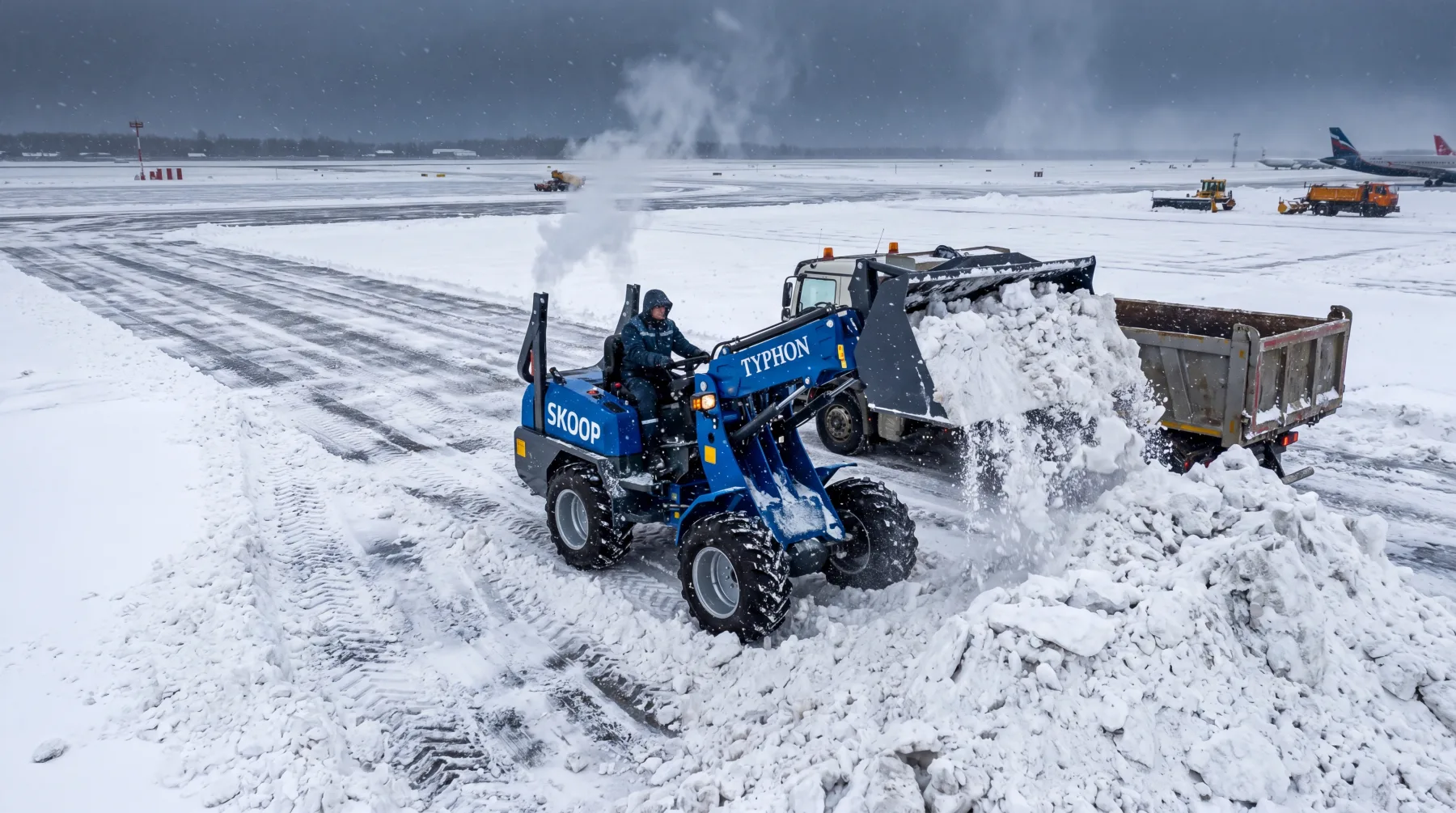
The clock starts to tick instantly when a large storm hits a commercial building, a regional airport, or a large municipal parking lot. You have a very short window of time to remove large amounts of snow before it becomes hazardous ice, obstructs vital access points, and puts your company in grave danger. Wheel loaders are able to handle the sheer volume of material in these harsh conditions, while smaller equipment just cannot.
A wheel loader is the perfect workhorse for large-scale snow removal, making an otherwise daunting operation extremely simple. A single machine and operator can clear an area that would normally require a whole fleet of smaller trucks or tractors thanks to its enormous lifting power, remarkable travel speed, and attachment diversity. Faster site turnaround times, more client safety, and a far better financial line for your business are all directly correlated with this level of efficiency.
Wheel loaders provide the heavy-duty traction required to carry heavy, wet, or drifting snow easily, even on difficult surfaces, going beyond their raw capacity. Investing in this skill allows you to take charge of the cleanup process instead of fighting the storm. The wheel loader becomes your most precious asset when the weather gets bad since it keeps your property accessible and your business operations operating smoothly, no matter how much snow falls.
Why the Right Machine Matters in Snow Removal
Snow removal at scale is a race against time and temperature. Every hour snow sits on the ground, it gets heavier, packs harder, and becomes more dangerous to clear. The machine you choose determines whether you finish ahead of the next snowfall or fall behind before the storm even ends. A wheel loader brings the size, power, and versatility that large jobs demand. It handles the volume that smaller skid steers and pickups cannot, works reliably in brutal conditions, and adapts to nearly any clearing task with the right attachment. The five strengths below explain exactly why it is the backbone of professional snow operations.
https://img.miniexcavator.org/ebay/Website-Team/Class3-4June/27-june/b7-02.webp
Superior Lifting Height and Capacity
The first thing that sets a wheel loader apart is raw lifting power. Where smaller machines push snow around, a wheel loader lifts and relocates it. Its powerful hydraulics raise massive piles of snow and dump them high into large trucks or over tall banks, so you clear wide areas fast without making pass after pass. That capacity matters most when snow has nowhere left to go. By midwinter, the banks lining a parking lot can stand several feet high. A wheel loader reaches over them to keep stacking, or loads snow directly into haul trucks for removal. You move mountains of snow in a fraction of the time. To get the most from your lifting capacity, match your bucket size to the haul truck so a few clean scoops fill the truck, which cuts down on wasted cycles. You should also start stacking high early, building neat and tall piles from the start of the season so you have plenty of room as snow accumulates. Always lift smoothly, letting the hydraulics do the heavy work with controlled movements to protect the machine and keep your loads stable.
High Travel Speed for Fast Clearing
On a large property, distance is the enemy. Moving snow is only part of the job, and getting from one zone to another eats up valuable time when a storm is bearing down. Wheel loaders are built to travel quickly between areas, which is exactly what large scale clearing demands. That speed changes the math of a long shift. The less time you spend driving across a site, the more time you spend actually pushing or loading snow. On a sprawling industrial campus or a multi lot retail center, a faster machine means you cover the whole property before fresh accumulation undoes your early work. To use this speed effectively, plan an efficient route, mapping your clearing path to minimize empty travel and double backs across the property. You should prioritize high traffic zones first, such as entrances, fire lanes, and main drives, then circle back to overflow areas. Travel light between zones by raising the attachment to a safe travel height so you can move efficiently to the next section.
Ability to Use Specialized Snow Attachments
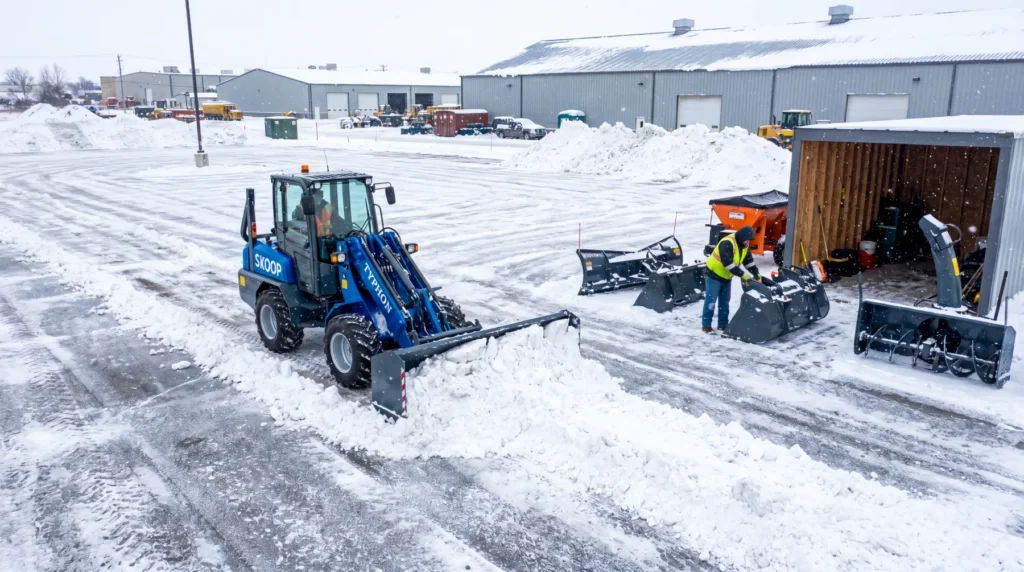
A wheel loader versatility comes from its attachment system. You can swap a standard bucket for purpose built snow tools in minutes, transforming the machine for the exact job in front of you. That flexibility is a major reason wheel loaders dominate professional snow work. The right attachment clears wide areas in a single sweep. Snow pushers and box plows carry and clear enormous volumes across open lots, far more than a bucket alone. Snow blowers cut through deep or packed snow and throw it well clear of the area, which is ideal where there is nowhere left to stack. Finally, buckets handle the lifting and loading work when it is time to haul snow off site. This adaptability means one machine covers your entire operation. A box plow clears the wide open parking lot, then you switch to a bucket to load the piles into trucks. You get the right tool for each phase without parking the loader and bringing in another machine. When working with attachments, choose your width wisely, as a wider pusher clears faster on open lots while a narrower one maneuvers better in tight spaces. Keep your quick couplers maintained by cleaning and inspecting coupling points so attachment changes stay fast and reliable in the cold. Match the tool to the snow, using pushers for fresh accumulation and blowers for deep snow that resists pushing.
Excellent Traction on Frozen Ground
Power and speed mean nothing if the machine cannot grip the surface. Snow removal happens on the slickest ground of the year, and a machine that slips and stalls costs you time you do not have. This is where a wheel loader traction proves its worth. Large, heavy tires combined with four wheel drive give wheel loaders the grip to push through heavy, wet, or packed snow without getting stuck. The substantial weight of the machine presses those big tires into the surface, while the four wheel drive system distributes power to keep it moving forward even when the ground beneath is icy or slick. That reliable traction means consistent progress instead of spinning wheels. To maximize this traction, run the right tires, choosing ones suited to winter work and considering chains for especially icy conditions. Check your tire condition before the season, as worn tread dramatically reduces grip, so inspect and replace tires before the first storm hits. Finally, push with controlled power, applying steady throttle rather than sudden bursts to maintain grip on slippery surfaces.
Increased Operator Comfort for Long Shifts
The machine matters, but so does the person running it. Snow removal often unfolds during long, cold nights when storms hit hardest. An operator battling cold and fatigue makes mistakes and slows down. Modern wheel loader cabs are built to prevent exactly that. A climate controlled cab keeps the operator warm, dry, and comfortable through hours of demanding work. Combined with excellent visibility from the elevated seating position, that comfort helps the operator stay focused and productive far longer than they could in an open air machine. A focused operator clears faster, works more safely, and lasts through the full overnight shift. To support your operators, use the cab features effectively, keeping heat and defrost running to maintain clear glass and a comfortable temperature. Schedule sensible breaks, because even in a warm cab, rotating operators on marathon shifts helps keep everyone sharp. Maintain visibility by cleaning lights, mirrors, and windows before each shift so the operator sees clearly in dark, snowy conditions.
Common Mistakes and Recap
Even with the right machine, a few avoidable missteps can slow a snow operation down. Undersizing the machine or attachment, such as choosing too small a loader or pusher for the property, means endless passes and missed deadlines. Skipping pre season prep, like ignoring worn tires, neglected hydraulics, or faulty couplers, causes failures at the worst possible time. Poor site planning, such as stacking snow in the wrong spots, blocks access and leaves no room for future accumulation. Finally, running operators into the ground causes fatigue, which leads to errors and accidents, even with a comfortable cab. Avoid these, and your wheel loader delivers its full value all winter long. Use this quick checklist to put your machine to work: match capacity to the job by sizing your bucket for maximum snow, plan an efficient route to cut travel time, equip the right attachment, prep for traction by checking tires and chains, and support your operator with a warm cab and scheduled breaks.
Conclusion
Large-scale snow removal demands a machine built specifically for high volume, rapid speed, and incredibly tough conditions, and the wheel loader delivers on every front. Its superior lifting capacity allows you to relocate mountains of snow with fewer passes, significantly reducing the time spent clearing each zone. High travel speed keeps you ahead of the storm across even the most sprawling properties, ensuring that priority areas remain clear while minimizing non-productive driving time.
Equipped with specialized attachments, these machines can clear wide areas in a single sweep, while dependable traction ensures the equipment keeps moving even on the most frozen or icy ground. Furthermore, a modern, climate-controlled cab keeps your operator sharp, focused, and comfortable through the longest, coldest nights. By matching the right loader to your specific site needs, you transform an overwhelming seasonal challenge into a streamlined, highly predictable operation. Investing in a wheel loader is not just about moving snow; it is about building a reliable system that protects your clients, maximizes your equipment fleet, and guarantees your property stays accessible regardless of how much snow falls. When you choose the right tool for the scale of your work, you secure a decisive advantage over the storm and set your business up for a productive and profitable winter season.